A blog that focuses on our unique program that teaches natural horsemanship, heritage breed conservation, soil and water conservation, and even folk, roots, and Americana music. This blog discusses our efforts to prevent the extinction of the Corolla Spanish Mustang. Choctaw Colonial Spanish Horse, Marsh Tacky, and the remnants of the Grand Canyon Colonial Spanish Horse strain.
Thursday, July 30, 2020
A Shelter For Our Veterans Programs, Horse Training and Educational Programs
Thanks to a grant from TC Energy and the hard work and planning of several of our most dedicated program participants, we are going to come out of this pandemic with a better educational and programming infrastructure than we have ever had.
For over seven years those who were in the inpatient PTSD program at the Hampton VA Hospital came over weekly for sessions with our horses. Constructed of heavy timbers the shelter that is now around this round pen will last for decades to come. Native vines have been planted and are starting to climb up to the top where they will provide cool shade in the hot summer months.
While we await their growth, shade is provided by well reinforced fabric.
It is ironic the twists that our language takes as trite phrases are used and reused. Today when we say that something is a "work in progress" we use the term as a sort of an apology that the project is not where it should be. It is a shame that the phrase has taken on such negative connotations.
This shelter is a living shelter. The vines are longer this morning than they were yesterday. As a living shelter it will continue to grow. That continuous growth makes it a "work in progress," which is a perfect metaphor for our program. Like the rest of the nation the we are limping through the summer with very limited programming--but that is not going to last forever.
Our program is a "work in progress" and even in this environment we are continuing to work and progress.
Tuesday, July 28, 2020
Waking Up
I guess that this is what it is like to wake up from a coma. Moving back into life is stranger than I imagined. Since the virus struck, this is the third time that we have attempted to get together to play music. The first two efforts were very sad. We were without a fiddler and we were so far apart that we could not hear each other enough to stitch the tunes together.
I was not looking forward to getting together last night. I had lost my recollection of how much I enjoyed playing music with the kids. But I got reminded last night. Chris had to work late so we missed his dobro, but the little girls have gotten older over the past six months and they song with much more power. We had a fiddler. the kids sounded good and they were having fun.
Grace Cofer was raised in England and during World War II flower gardens were replaced with vegetable gardens to feed the nation under Nazi assault. She told me that when the war was over the flowers seemed prettier than they seemed before the war. I hope that our war will end soon.
I am looking forward to listening to some beautiful flowers.
Saturday, July 25, 2020
When Exposed to The Withering Sun
What can you as a horse owner, as in you, you directly, you the person who is reading this and who I am pointing at at this moment, do to make this a better, safer nation?
I just finished "MindHunter", John Douglas' memoir , written along with Mark Olshaker, of the development of the FBI's Behavioral Analysis Unit. For over twenty years I have been a prosecutor of crimes against children, child molestation, sexual assault and murder, along with a range of other criminal offenses. For nearly as long I have been teaching natural horsemanship to people who come from a range of backgrounds, including some who have suffered the most severe childhood trauma that one could imagine.
I have watched immersion in equine relationships completely change lives.
One can search key words on this blog, such as "trauma", PTSD, "Prey Animal," and "healing" to get more information on this aspect of our program. A few years ago I learned of the significance of Adverse Childhood Experiences. If you are not aware of the ACE score importance please see https://vetoviolence.cdc.gov/apps/phl/resource_center_infographic.html
The most important lesson that I have learned from the ACE research is that we can often change future behavior , and reduce future suffering by intervening in a positive manner with young people regardless of how high their ACE score is.
I am a believer in counselling. I am a believer in medication. I am a believer in science. But most of all I am a believer in love. One need not develop a program as large as ours to ease the suffering of young people. I have been told by numerous visitors over the years, in nearly the same terms-"I had a neighbor who had a horse. She knew some of what I was going through. If it had not been for her and that old horse I would not have survived."
If you have a horse be that neighbor. Be the intervenor that changes lives. Here's what John Douglas,a man who hunted serial killers, a professional crime fighter, a hard nosed lawman wrote, over 20 years ago in "Mindhunter":
"But twenty-five years of observation has also told me that criminals are more "made" than "born" which means that somewhere along the line, someone who provided a profound negative influence could have provided a profound positive one instead. So what I truly believe is that, along with more money and police and prisons, what we most need more of is love. This is not being simplistic:
it's at the very heart of the issue."
And you and your horse can provide that love. And while your horse is standing there idly in the stable and while you are scrolling through your phone there is a kid in your community reaching over to find an old razor blade.
Wednesday, July 22, 2020
Grow Up--Ride A Donkey
Do you feel too old to ride a horse? Did you love riding years ago but think it an impossible dream now? Are you acutely aware of how easy it is for your bones to break?
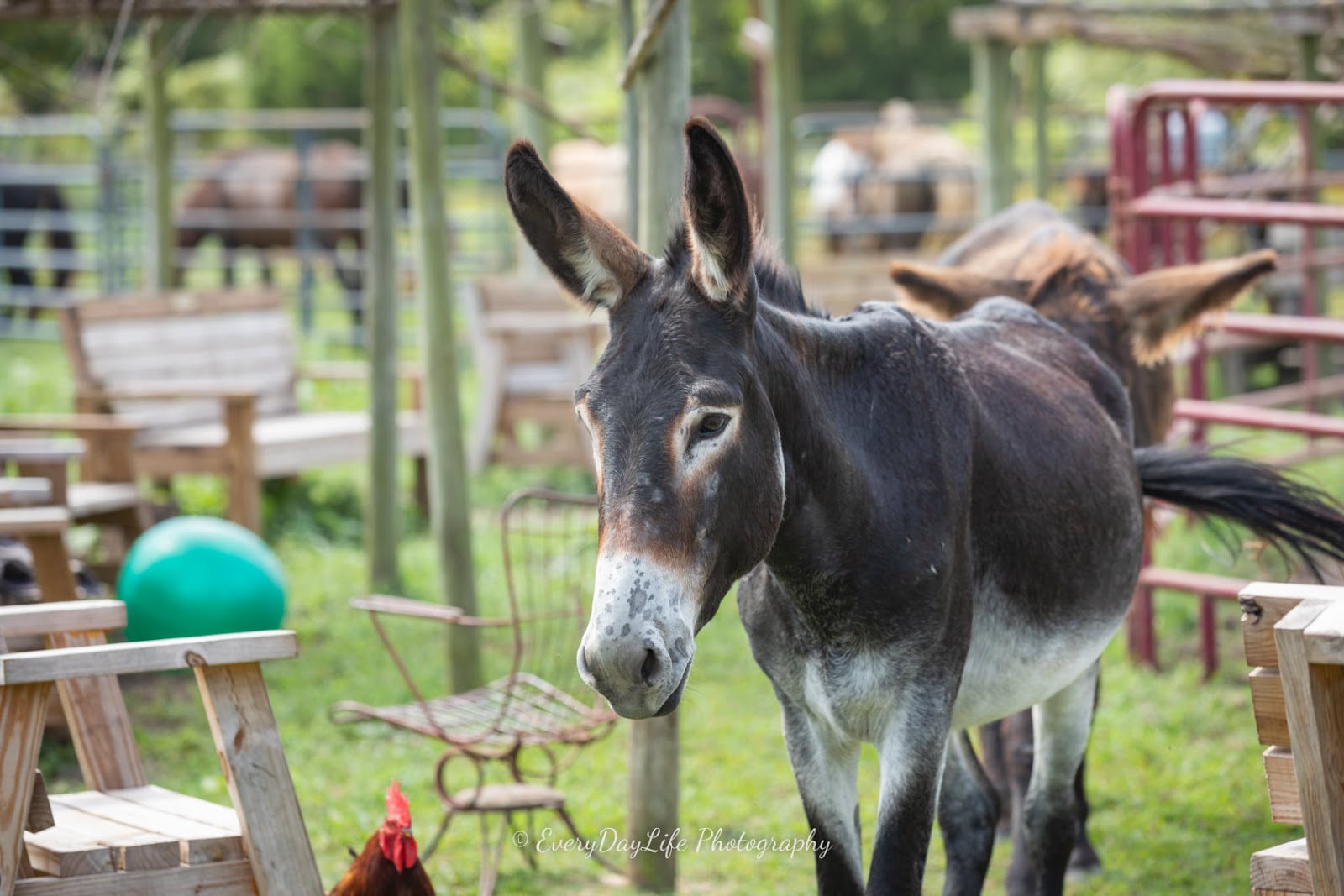
Buy a well trained saddle donkey. A large standard donkey can carry much more weight than a horse of similar size. A mammoth donkey can carry more than you'd imagine.
Here is the part that people don't realize--not only can they carry you, chances are they can carry you with a smoother, steadier gait than a horse--yes, even a Colonial Spanish horse. The only down side is that one does not get a hard workout from riding a donkey. They are too smooth.
Finding a well trained saddle donkey is not easy or cheap, but if you are old enough to start thinking about things that medicare covers a well trained donkey is a sound investment
Thursday, July 16, 2020
Can You Hear Silent Cries?
"Wonderful things of folks are said
When they have passed away
Roses adorn the narrow bed
Over the sleeping clay
Give me the roses while I live
Trying to cheer me on
Useless the flowers that we give
After the soul is gone"
A.P. Carter, "Give Me The Roses While I Live"
Have you ever heard a kid talk about suicide? Suicides are at an all time high among young people. By the time a teenager starts to verbalize the thought the risk of carrying out that thought is quite high. A much higher risk than I ever want to take.
When that happens one must know how important it is to work to postpone any effort to follow through on the thought. "Postpone" is a shocking term. By using this term I do not mean to suggest that it is inevitable that the thought will lead to an attempt at self destruction. Instead the term is used to emphasize the urgency of the situation.
That means telling adults even if you promised your friend that you would keep the conversation confidential. Even if doing so will make your friend mad. Let them be mad. One must be alive to be mad and that is a great trade off.
Refer them immediately to suicide prevention hotlines and services. If you are an adult who works with young people you should have a card made up with phone numbers and other contact information for service providers.
But all of that is a detailed topic for another post. This discussion is for all of the times that suicide has not been verbalized. this discussion is for all of the times that pain has been verbalized, but not heard.
Think how often you have heard it said, in a strong tone of derision and scorn--"Well she just said that to get attention."
A young person who must go to those lengths in order to get attention must be in desperate need of that attention. It is the silent cries for attention that we must become better at listening for.
I have no science to support this belief, but I strongly suspect that the verbalization of a desire to end one's life makes it much more likely that a young person will follow through on that verbalization.
If I am correct, it makes it very important to make sure that the young person receive attention before having to ever say or write anything about ending their life.
When a young person says something like, "Everyone in school hates me,' that is the time to put down everything that you are doing and have a meaningful conversation.
That is not the time to say, "Oh, I'm sure that it is not all that bad."
When a young person says, "I feel like I am always letting everyone down.", put your phone down and find out what it going on in that child's life.
When an adopted child says, "I don't understand why my parents did not love me.", that is not a time for bumper sticker platitudes. It is a time to help that child understand their own worth as a human.
Young people talk to me. They always have, even when I was only 13 or 14 little kids at school talked to me about problems that they were having on the bus, at home, at recess, or in class. Often they are so tentative in what they are saying to me that I am unable to identify the problem.
At those times I bluntly say, "I know something is wrong but I am not sure what it is, based on what you are saying. Tell me in another way so I can understand."
And they do. I never fall back on silly thoughts like, "Well, when they are ready to talk to me I am sure they will." If I see a kid that is hurting and I ask them what is wrong, only to see tears being quickly wiped away as the child whimpers out "nothing." I do not let the conversation end there.
I do not mind being direct. More direct than most others might think appropriate. I do not feel bad for responding, "Hey, don't play that stuff with me. Who do you think I am, just some old man to be blown off that easy? Now lets talk about what is wrong."
Talking to young people is not brain surgery. It is no harder than communicating with a wild horse. You can learn to hear what a horse is saying with its eyes.
You can also learn to hear silent cries of young people in pain.
Subscribe to:
Comments (Atom)