Labels

Saturday, November 25, 2017

Very Special Volunteer Opportunity


Yesterday our crack team of mechanics and assemblers finished putting together a wood chipper. Goats, horses, guineas, turkeys, earthworms and microbes, kids to roll out hay bales, Wendell's brush buster, my chain saw and bladed weedeater, new wood chipper, and hopefully some community volunteers will finish the clearing of the new land this winter.


                                                                 Our old Chickee.

We still have several educational structures to assemble including a Powhatan scare crow hut, a chickee, a large wooden Corral/round pen--Even if horses are not your thing you can still be a very important part of our program by being a regular volunteer on these projects--you can do a lot of good for a lot of people by putting in 8-10 hours of volunteer work--if you like being out doors, care about the environment, enjoy history, see the need for preservation of heritage livestock, or just want to spend some time with people committed to making a difference send me an email at msindianhorses@aol.com

Thursday, November 23, 2017

Living History at Mill Swamp Indian Horses: Here is Your Chance To Help Out


Education and entertainment can and should happen at the same time. All the way through college and law school I worked at Jamestown. I was "in costume" for those teaching performances. Perhaps that is why I am so drawn to the power of living history presentations. The other reason is that all of my life history has been living all around me. I walk and ride where John Smith walked in 1608, near where Benedict Arnold and Bannister Tarleton rode during the Revolution, and in the county beside where Nat Turner killed and died, in what I believe to be one of the most important events leading up to the Civil War.

Every year on November 22 around lunch time I get a general feeling of unease as my mind wonders back to what I watched on television at the Little House in 1963. Last Sunday I visited Malvern Hill. On July 1, 1862 in a period of only four hours over 8,000 men were casualties in a wide open field of only a few hundred acres. Hard to describe how that made me feel. I was glad to leave that field but I could not help but keep thinking of the thousands of men who wanted to lave that field much more than I did, but never had that chance.

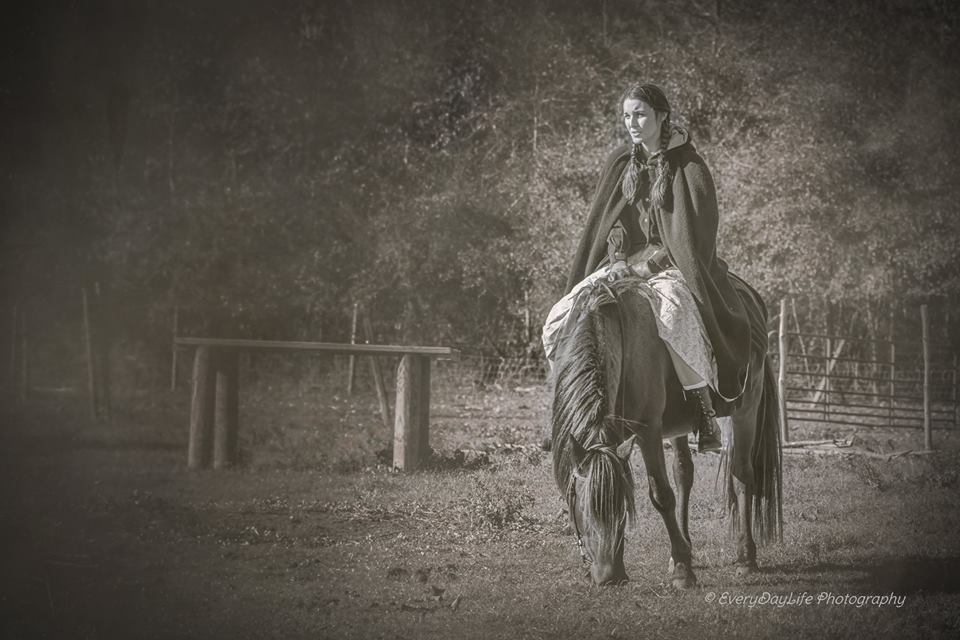
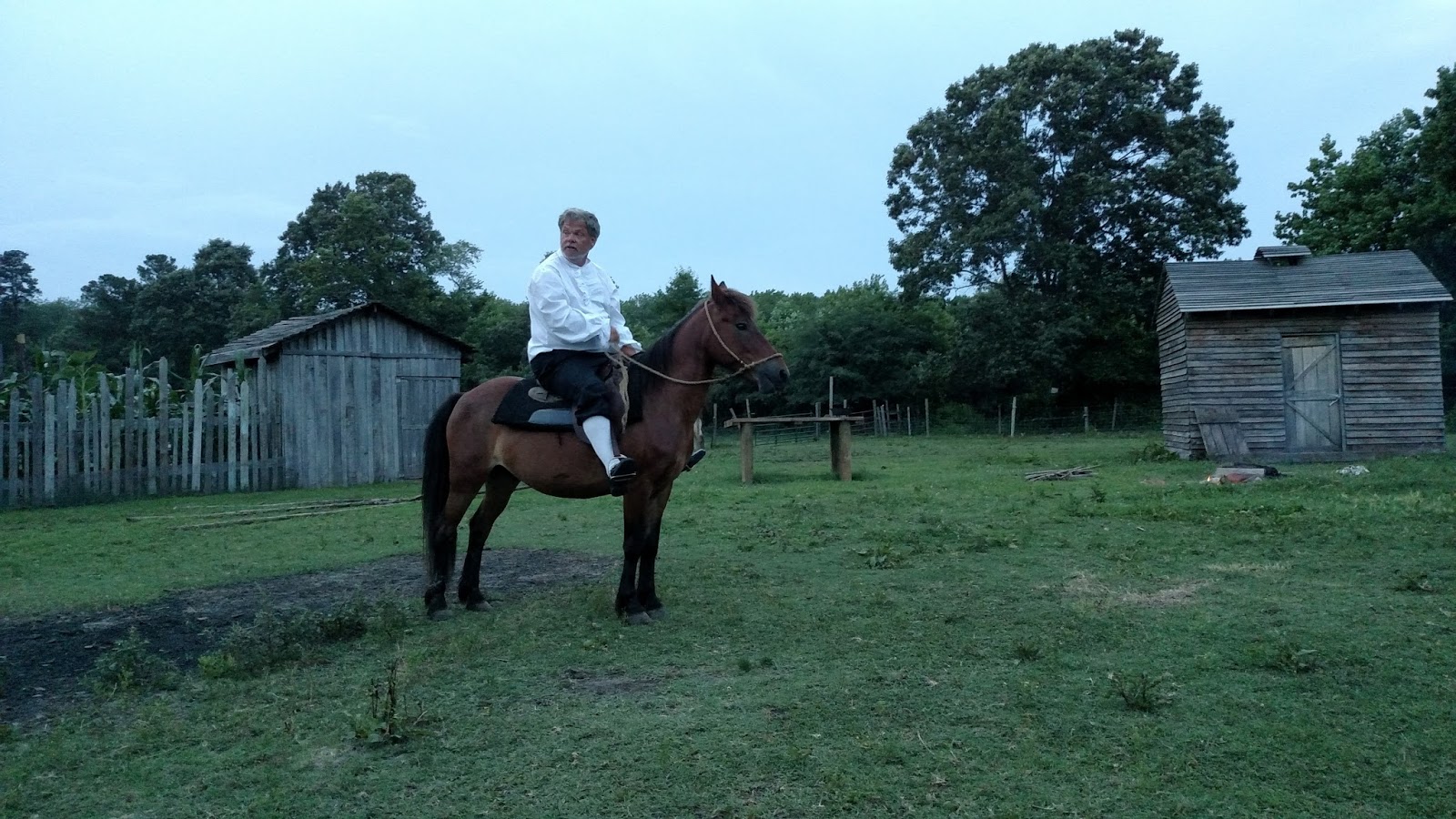
Our 1650's era replicated farm, our colonial livestock, and the sense of history that permeates the air of Tidewater Virginia create the perfect stage for Living history presentations. I would love to add a drama component to our program. We could do sessions on research to develop a historical character, costuming, acting, and writing along with hosting regular performances.

Herein lies both the opportunity and the problem. We have no paid staff. We are all volunteers. Everything that we do,from our riding program, our breeding program, our livestock husbandry, our music program, our PTSD program, our natural horsemanship program and our permaculture program is conducted by skilled and dedicate volunteers.

I need an additional set of skilled and dedicated volunteers in the Tidewater area to develop a living history program that will be able to host regular performances during the summer and fall and to teach the skills set out above to participants, particularly young participants.

So, Contact me now, at msindianhorses@aol.com , if you would like to help develop this program. Don't put off contacting me until after the holidays. Things that get put off often never come to fruition. Are you active in Little Theater, children's drama, historic reenactment? Contact me now to help us develop one more incredible program.

I want to have a solid program plan in place by February 1, 2018


Freedom


There is a serious problem with way to many equine discussion pages. The saddest part about it is that horses and the established horse world attract many people who want the power of being arbiters and rule makers/rule enforcers. The ultimate irony is that dedicated practice of natural horsemanship and, specifically, spending many hours in the round pen with wild horses, or unstarted colts, absolutely erase the desire to control the behavior and thoughts of other people.

Building a meaningful relationship with a horse is a liberating experience. It can never be based on accepting a mindless set of rules and the edicts of the loudest, shrillest voices.

Listen to the softer voices of Brannamen, Dorrence, Rashid, and the few other writers like them who understand horses, people and pain. People often speak of the spiritual aspect of horsemanship. I have always had difficulty with that discussion because the term "spiritual" is used so broadly that it is hard to give it any meaningful definition. With that said, I believe that a solid relationship with a horse leads to a deeper understanding of what the author of the Letter of James referred to as a pure religion.

It requires one to give the horse unconditional love. It teaches the concept of service to the horse and to others. It teaches the respect of each horse without regard to its price or lineage. It teaches one to be humble. It teaches that the purpose of acquiring power is to allow one to serve more people, not to control more people.

It teaches one to shut up and listen.

For one who wants to be a better horse person, and a better person--stay away from the negativism of the establishd horse world--read Brannaman, Dorrrence, Rashid--and the Letter of James.

Wednesday, November 22, 2017

Microbes, Vermiculture, and Old Hay Experiment


We are doing an experiment in our Homeschool program to test some applications for natural pasture enhancement. We use no commercial fertilizer or herbicides. I am learning more every day about compost, permaculture, and regenerative agriculture. I am particularly pleased with what I have learned through online classes with Simple Soil Solutions.

I was always puzzled at the waste layers that built up under round bales. They stayed very moist, were composed of layers of old hay and horse manure. To my very uneducated mind they appeared to be the perfect self creating compost pile. Except that it took forever for them to break down and often after they did they left beautiful, rich looking black soil upon which nothing grew for a couple of years and when it did grow the resulting vegetation looked no stronger than grass grown several feet away from the old piles.

I now understand the effects of compaction and lack of oxygen in those piles. We have a rather large vermiculture operation in which we add only coffee grounds, weed stems, horse manure and the occasional bit of old hay. We keep it in an old hot tub that we buried to ground level. It rarely has any problem with freezing. A year ago I set out 1000 red wigglers in the container. They have been fruitful and multiplied.

About four times a year we add around 500 pounds of manure from the pasture to the container.

I began to experiment with spreading the old layers of hay waste out in the pasture. As soon as some air could get to old hay that I was spreading it broke down super fast and grass took off. However, it is very hard work to rake and pitch fork these areas out. On the new land we had a build up of waste hay that was only a few months old. We used a post hole digger and laid out of grid of twelve postholes about a foot deep. We added compost from the vermicompost system. It was loaded with beneficial microbes. To my surprise the muddy area began to dry up rather quickly and the waste hay began to disappear.

In the pictures above we are doing an experiment. Audrey's pictures show two of these compacted waste hay areas. In one we use post hole diggers and covered the vermicompost in the holes that we set out in the waste area. (The waste areas had broken down so little in their extreme compaction that we found layers of horse manure that were still completely intact even though it had been buried for at least several months.) In the other we used an equal amount of Vermicompost and simply applied to to the surface of that waste pile.

Of course we hope that simply top dressing with our active vermicompost is going to provide results as good as injecting it under ground does. Would have been better to have done this experiment in the summer but we shoud still get results.

It would be a nice benefit to the horse owner with few horses and small acreage to simply drop a few ounces of active vermicompost on dry manure piles and have them break down in place

Friday, November 17, 2017

The Pastures, Trails, and Replicated Farm Site Of Milll Swamp Indian Horses


The farm belonged to my grand father's grand father. It is a Virginia Century Farm, meaning that it has been in our family for over 100 years. Our first white ancestors owned land about seven miles from here around 1650. Since that time I have had family living within a ten mile radius of the horse lot.

The Little House is on Moonlight Road. It is the house that my mother was born in. Beth and I purchased it about ten years ago. The land that it stands on was then added to the long strip of land that ran from the highway to just across an old abandoned railroad bed. The addition of the app. four acres of land that went with the Little House was then added to the app, 38 acres of open land and woods that my mother gave to me before she died.

A year ago Beth and I purchased the nearly 20 acres adjacent to these two strips of land. We purchased it for the use of our program. That is the part of the picture above that bulges out on the left side of the picture.

Around 2001 Daddy and I fenced in eight acres and built a shelter to conform to the standards required by the Bureau of Land Management in order to adopt a pair of mustangs. We built our first round pen. The other half of the open land was planted in oats and we grew oat hay which was bound in small square bales. The farmer who baled the hay got half of the bales, leaving me with over three hundred bales. I could not imagine how long it would take for the horses to eat such a vast amount of hay. (Now that supply would last us less than a month!)

As we got more horses and I started having riding students we fenced in more land and stopped growing our own hay. Soon the pastures were divided into several big pens. using about 1.2 miles of wire. All of the post holes were dug by hand primarily by Daddy and I with occasional help from my brothers. It would take Lido too long to describe which pen he was referring to so he numbered the pens 1-5 and designated each with a number.

While sitting in my wife's family's home and thinking about replica historical farm sites across the nation it occurred to me that our Colonial Spanish Horses of the Southeast could best be understood in their historical perspective if placed in a setting that served as a picture frame around them. I began thinking about building a replicated farm to symbolize the time frame that the Corollas and Shacklefords represented. It was expensive but Beth and I had such a farm site built. First the Smokehouse, then the settlers one room home, Corn Crib and Tobacco barn. We added in Colonial livestock over the years--Spanish goats, Dominique chickens, and now Ossabaw hogs. We developed a limited living history program.

All the while our riding program was growing by leaps and bounds. Other programs were added. For a few years Kay Kerr ran a wonderful art program teaching little riders to paint.Their paintings were sold at the Corolla Wild Horse Fund's museum to benefit the Fund. Linda Hurst wrote two children's books about one of our horses, "Red Feather." Kay Kerr's great book "Sand Horse Beach:Croatoan's Memoirs" was named bet "Illustrated Children's Book" at the Equus Film Festival and tomorrow her film based on the book will have its debut at the Equus Film Festival in New York. At the annual meeting of the Livestock Breeds Conservancy I saw the debut of Krista Rutherford's great documentary "America's Forgotten Horses", which focused on efforts to preserve the Colonial Spanish Horse.

Kay has impacted our program in other ways. She developed our veteran's program. Every week those who are in the in patient treatment program for PTSD at the Hampton VA hospital come out and work horses in the round pen. Ashley Edwards turned my mind more to using these nearly extinct horses to help nearly destroyed humans than it had been before. (There is a search feature to this blog--if you do not know all about Ashley search her name in that little search box and read the posts about her. You will be glad that you did)Our website www.millswampindianhorses.com has a great list of links to tv and newspaper stories about our program--http://www.millswampindianhorses.com/news/

Richard Blaney donated Nimo, a Galiceno, to our program. Vickie Ives of Karma Farms sent some of the Grand Canyon line here through Scoundrel and Queen Jane along with our colonial Spanish goats of the Syfan strain. Monique Henry asked us to accept our first two Choctaws, Manny and Joey, who are mainstays of our program. And my very special little mare, Janie, came all the way up from Texas from Lothlarien Farms. We purchased several Marsh Tackys. Pam Yahn gave us our first ossabaw hogs. Wendy Dean gave us two Baylis Spanish Goats.

I am quite certain that I have failed to mention the accomplishments of many of our riders, the awards that they have won, the honors that our program has received, and the tremendous amount of work that volunteers have put into our program. I did so on purpose. Were I to list the physical and financial contributions that volunteers and supporters have put into this program the post wold go on for many pages.

And we have no paid staff. And we have never turned anyone away for lack of ability to pay program fees.

The most important contribution that I have made to our program is that I have constantly stuck to one principle --one two word goal--More and Better. We do not get the hate mail that we once did. Early on we did and much of it was vicious. I understood that More and Better would require us to utterly ignore the pronouncements of the established horse world, to do absolutely nothing to compromise our program's values and our horse's health by moving away from natural horse care, natural hoof care and natural horsemanship. I understood that More and Better would require us to push on past well meaning advisors who said that we should just focus on riding and not spread ourselves too thin. I understood that More and Better meant that we would best serve the horses and people by working to become a cultural and educational institution instead of becoming a riding barn. Most importantly, I understood that More and Better required us to absolutely ignore appearances and put 100% of our focus on reality. I understood that we could attract Ellie Mae or Mrs. Drysdale, but not both of them. In a note urging me to "quit breeding worthless crap with no market value" I was further informed that the "entire horse world" was laughing at what we were doing. The note went on to suggest some steps that I could take to learn the error of my ways and how to conform to the expectations of that horse world.

I declined to do so.

The major contribution that I have made to the development of our program is not what I have done. It is what I have refused to do. For nearly two decades we have rejected the siren song that bid us to become just another place for little rich white girls to play with ponies.

Which brings us to where we are today.

That red line is a trial that rims the land that Beth and I own. It is 1.82 miles. It is not completed. I have several more links to cut into this trail. Though I always am leery of citing the contributions of any adults in our program for fear of creating the appearance of slighting the contributions of others, this trail would not be possible but for the hard work that Wendell put into developing it, using the brush buster that he purchased himself for this purpose.

And last Friday members of the Livestock Breed Conservancy got a chance to see how we do things. I think it fair to say that they all left feeling better for the experience.

The sun will be up in an hour. I am going to go fire up my chain saw and work on clearing more of the new land. Kids in the home school program will be arriving in about three hours. We need to separate Matchcoor from his mother so that he and Swimmer can be taken to a farm a few hours north of here to create yet another Corolla offsite breeding program. We have nearly 10,000 pounds of hay in round bales to roll out to help microbe development in our pastures (Oh yeah, I forgot to mention that we practice and teach permaculture practices for soil and water conservation)

And I think that Sally will be having an incredibly well bred Colonial Spanish foal in February. And we will be adding a Colonial era heifer to our program in short order.

Tonight some of us will be playing music at a local church.

More and Better