Labels

Tuesday, February 27, 2018

Behind the Lens


Our group Facebook page, Mill Swamp Indian Horses (group page) is the best illustrated group facebook page that I know of. The credit goes to Sherry Leonard of Everyday Life Photography. Her photos are art of the highest caliber. They document everything that goes on at the horse lot.

They make it possible for one to understand that, yes, we really do teach little kids how to tame and train horses. Or that we make lard. Or that we make music. Or that we raise heritage livestock. Or that we preserve nearly extinct strains of horses.

And that we change lives.

And that, sometimes at the horse lot yesterday, today and tomorrow all happen at the same time.

This photo was taken less than a week ago. It is of our replicated 1650's era settler's farm with a hog freshly hung for preparation to go into the smokehouse.

But What Are You Going To Do When you Grow Up?


Are you tired of grown ups who do not understand why you want to spend every minute possible with horses telling you that you need to get serious and prepare for your future? It is frustrating when they do not understand that horses can, and should be part of that future. That can happen in many different ways.

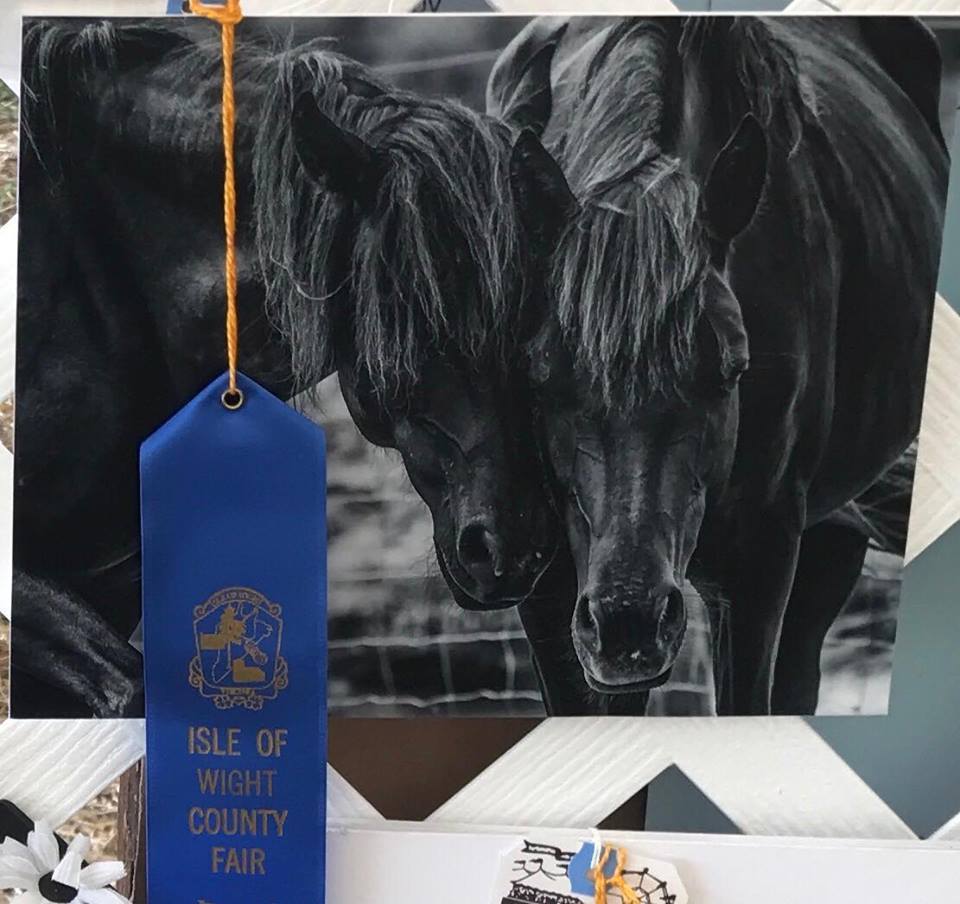
Equine photography is a growing specialty niche in the photographic world. This great photo by Everyday Life Photography is beautiful art in itself but it also promotes the preservation of nearly extinct  historic horses like this mother and daughter Choctaw pair.

Natural hoof care is growing in practice as more people understand the importance of allowing a horse's hoof to be shaped so that it can function at its highest capacity. Jenn Hill is a professional farrier. She combined her practical experience with natural horsemanship and her education in farrier school to allow her to safely and humanely trim even hard to handle horses.
Quality hand made tack is always in demand.  Start up costs can be quite low and one can expand production slowly. Pam Yohn makes girths out of mohair and they are the best girths that I have ever used. They hold the saddle in place and expand and contract with the movement of the horse.

There is always a need for affordable horse trainers who focus on producing safe, solid family horses. When one thinks of trainers one often thinks of the horse show world. That world makes up a small segment of horse owners. Most horse owners are looking for a family horse for trails and recreation.
The best trainers are those who can also teach owners how to train their horses. These trainers recognize that training is a continuing educational process and that no horse ever finishes training. Every time one touches a horse one is training it. Lydia Barr trains horses and owners. Best of all she teaches them how to have close, meaningful relationships with their horses.

One of the most rewarding careers with horses is using them to improve the lives of other people. Equine therapy does just that. Combining a love of horses with a solid educational background in psychology, counselling or physical therapy can lead to a very rewarding career.

Many of us receive our first introduction to horses through books. Authors who specialize in children's books  create generations of happy horse owners. Kay Kerr wrote this award winning children's illustrated book about the endangered horses of Corolla. Her work entertains, educates, and helps bring awareness of the plight that these horses face.

The next time some adult who just does not understand tells you that your love of horses is "just a phase" that you are going through keep in mind that it might just be a phase that lasts through a long, meaningful life. 


Saturday, February 24, 2018

Mill Swamp Indian Horses: Building Living Soil


Program participants learn natural horsemanship. They learn to tame, train, and ride wild horses. They learn animal husbandry and biological agriculture. They learn history. They learn music.

They learn to work hard and to work together. They learn teamwork and they learn leadership.

We are converting a former pasture into multi use Silva pasture. We are doing it by hand and we are doing it entirely without modern fertilizers and pesticides or herbicides. We have cut several thousand small gum, Mimosa, ash, cherry and pine trees. The trees are coppiced. That allows branches to grow back out from the stumps that provide nutritious browse for the horses and other livestock while allowing sunlight to hit the ground which allows the grasses to take off growing. Pines are being strategically removed to both allow timber production and maximum forage growth.

Trees that have been cut down are used as posts, poles, or firewood. We have built a pole and post fence all the way around the pasture. Its interior is lined with electric fence to keep the livestock secure inside. Over the winter about twenty horses have been kept on this acreage. They have been fed round bales that we have been rolling out on the ground. Doing so allows for maximum microbe growth in the soil, while reseeding the land at the same time. Over the summer the land will be sprayed with microbe rich inoculant teas that we are creating in our vermiculture (worm Farming) project. Weeds will be kept in check primarily with our Spanish goat herd. This summer we hope to expand our heritage poultry program by moving bourbon red turkeys and cotton patch geese onto the new pasturage. They will keep weeds and insects in check while spreading beneficial microbes into the soil. Mimosas are legumes. They radically increase soil fertility while providing a high protein browse for the horses and goats.

We are entering the season of seriously confused parents of kids in our program. For everything that we do not understand we must apply the analogies that our past experiences provide us. For those who were never raised around pasture and livestock those analogies interpret pasture production through the lens of lawns, golf courses and cemeteries.

For the past three months I have been working frantically to prepare the New Land for spring. I have spent nearly no time training horses and have only spent a few hours in the saddle. Over the past week I have come to understand how poorly I have explained the importance of this work to many of the adults in our program. I did not grow up viewing forage production through the lens of lawns, golf courses, and cemeteries and I have not been accurately interpreting their misunderstanding.

From their framework of analysis I must be working so frantically because I want to improve the appearance of the property. Of course, appearance of the property means nothing to me. The ability of the land to regenerate itself and to produce maximum healthy forage for the horse while conserving soil and water means everything to me. When they look across the land they see brush piles that are unsightly and must be removed. When I look at that same land I see brush piles that are too small and too few because I need to have the brush off of the soil so sunlight can activate the grass seeds below the surface.

Our different back grounds have caused these parents and I to completely misunderstand what the other meant. This has been a very meaningful revelation to me. I am not as effective when communicating with adults as I am with children. I do not want to sound condescending so I say nothing at all. To make matters worse I assume, without giving it any thought, that others wear my lenses.

We really come from different worlds and it is something that I have to always keep in mind. When one's only exposure to animal care has been with the family cat or puppy one develops a view of animal care is based on showing how much one loves a pet by showing how much one worries about that pet's health. Any imperfection of health in that pet, however momentary, calls for a trip to the vet or at least the application of some chemical medication. In their eyes to do any less is to neglect the needs of that pet.

With that background they are unable to understand the importance of allowing an animal to heal itself. They cannot distinguish that from neglect. They cannot understand me declining to treat a trivial health hiccup that I know is of no moment. They view such benevolent non-action as a view that if the animal can survive without treatment, why go to the expense? When the reality is completely different---the animal is being harmed by compulsive applications of medicines that assault their immune systems, irritate their skin, disrupt their system, weaken their muscular system, and, in short, damage the horse.

I must do a better job of communicating with such people.

When people put horses on pastures that are resting and growing they do not understand that even a few hours of having one horse on that couple of acres does not allow the soil to heal sufficiently to create the kind of lush healthy pasture that benefits all of the horses.

I must do a better job of communicating that to people.

Which all brings me back to the original point of building living soil. Since around 1650 I have only had one direct ancestor in Daddy's line who never farmed. Although I am a prosecutor, I have grown up with agriculture. I have grown up knowing that to get better pasture one needed to till the soil, get a soil test, apply sufficient tonnage of chemicals and lime, plant the seed, poison the weeds, and repeat as needed.

And over the last few years, and especially over the last year, I have learned that everything that I thought was good for my soil was killing it. It is hard to throw away the assumptions that your "knowledge" is based on and make decisions based on evidence only. I truly felt queasy (this is not a figure of speech) when first rolling hay out on the new land. The idea of "wasting " hay like that sickened me.

It was hard to walk away from the beliefs of modern agribusiness.

Learning is hard. Unlearning is harder. I understand why there are people out there who believe that horses benefit from the abusive care advocated by the established horse world. I certainly cannot blame them for believing what they were taught. It takes a significant degree of character to put the interest of the horse first and to walk away from the established horse world.

That is a character trait that grows from the ground up.


Thursday, February 22, 2018

Mill Swamp Indian Horse Views: We Teach Natural Horsemanship to Kids


At its core natural horsemanship is simply using modes of communication with the horse that the horse understands instinctively. Instead of trying to teach horses to understand English we teach kids to understand equine communication. We teach empathy, understanding, kindness, boldness, confidence, gentleness and courage.

In short we teach leadership. A horse desires nothing more than he desires security. That security only exists when he is in the presence of a leader/protector. That can either be in the form of another horse or a person. Even a very young person.


The horse in this picture suffered a serious coyote bite as a foal. She is insecure and leery of the touch of a human. Yet, she finds trust and security in Liam, though he is still young enough to order off of the children's menu. If you would like for your child to learn to develop this kind of relationship with a horse contact us at msindianhorses@aol.com for more information.

If you want to see more children have the opportunity to have the Mill Swamp experience this is a great time to give us a hand.To learn more about our program see our website at www.millswampindianhorses.com. See the group Mill Swamp Indian Horses Facebook page.
 Look back through previous posts in this blog.

Future posts will focus on each individual string that makes up the entire harp of Mill Swamp Indian Horses. Stick with us over the next few weeks. Share these informational posts with everyone that you know.

Again, we have no paid staff. We are all volunteers. Our horses eat from 10-14 thousand pounds of hay each week. We are funded from program fees and donations. We have never turned anyone away for inability to pay program fees.

This is our time of greatest expense and also our season of fund raising. You can donate directly at the donation button on our website or you may write a check to Gwaltney Frontier Farm and mail is to 16 Dashiell Drive, Smithfield Va 23430. Donations are not tax deductible for a 501 (c) 5 breed conservation program. 

Become a follower of this blog to stay in touch with this effort. And as you read this and upcoming posts keep in mind that each post will only show one aspect of what we do.to do so.

Wednesday, February 21, 2018

Mill Swamp Indian Horses: The Stone That the Builders Rejected


Tradewind is older now, but he still has the heart that makes him so special. He is a formerly wild Corolla stallion and a lynch pin of our breeding efforts to prevent the extinction of the Banker strain of Colonial Spanish Horses, particularly those of Corolla origin. He was the 2011 National Pleasure Trail Horse of the Year for the Horse of the Americas registry. More than any horse in our program he demonstrates the gentle nature and extraordinary athletic ability of these historic horses. As recently as 1927 several thousand of these horses roamed the Outer Banks of North Carolina. Today only two small herds remain, the Corollas and the Shacklefords. The remnant of the horses that the Spanish brought to America nearly 100 years before the English landed at Jamestown retain the endurance, smooth gaits, amazing carrying capacity, and strong survival instinct that made them so valuable to the Conquistadors.

Tradewind won the 2011 award because in 2010 he carried me 206 hours on the trail, through cutover, swamps, woods paths and woods with no paths at all. The vast majority of those hours were spent trotting or gaiting. During that year I weighted around 220 pounds. That is about one hundred pounds more than the suggested carrying capacity of modern breeds of horses.

But the real story is not how much he achieved, it is how far he came to make those achievements. Tradewind is insulin resistant, a health problem rare among these horses.  While wild he foundered horribly, likely as a result of being given access to sugar by tourists.  His front right hoof had grown out while abscessing. He walked on the side of the hoof.

He was totally crippled. It took many months of Pete Ramey style hoof trimming to get him sound. It took a few months to train him to saddle. And in return he has given our riders years of pleasure learning from him.

Tradewind  is a very special role model. He shows kids and adults the importance of perseverance--never giving up--staying in the fight--no matter how hard it is to do so.


To learn more about our program see our website at www.millswampindianhorses.com. See the group Mill Swamp Indian Horses facebook page. Look back through previous posts in this blog.

Future posts will focus on each individual string that makes up the entire harp of Mill Swamp Indian Horses. Stick with us over the next few weeks. Share these informational posts with everyone that you know.

Again, we have no paid staff. We are all volunteers. Our horses eat from 10-14 thousand pounds of hay each week. We are funded from program fees and donations. We have never turned anyone away for inability to pay program fees.

This is our time of greatest expense and also our season of fund raising. You can donate directly at the donation button on our website or you may write a check to Gwaltney Frontier Farm and mail is to 16 Dashiell Drive, Smithfield Va 23430. Donations are not tax deductible for a 501 (c) 5 breed conservation program. 

Become a follower of this blog to stay in touch with this effort. And as you read this and upcoming posts keep in mind that each post will only show one aspect of what we do.